Sunday, March 23, 2014

Update on Bayview

Eason is excited to ride in a BIG moving van (a Dodge Ram, as he told
me) and Eliot and Kyra haul the first load of belongings to their new
house in Bayview for staging in the basement. Work goes on upstairs,
however, as Day 1 of installing the white oak hardwood floor commences.
Thank goodness, Kyra's family helped with the move, and her dad, Gary,
came by for the first day's flooring.

Charles New Chapter: Picasso and the Minotaur

CHAPTER SIX:  PICASSO AND THE MINOTAUR, His Snorting Inner Self
        
For many years Picasso had been using the Harlequin to represent images of his alter ego and his own brand of alchemical sorcery in his paintings but as time moved on into the later 1920’s Picasso searched for a new image to represent a more complex alter ego even deeper within him than the Harlequin had been.  Picasso’s life was becoming intensely complicated as the years unraveled and he needed an image that would express all of these varied emotions and experiences he was having within his estranged and unhappy marriage with his wife Olga, with his lust for other women (most notably a seven-teen year old Marie-Therese) his friends, his dealers and even the most hidden and deepest thoughts of his own inner self and possibly even his own personal recognition and understanding of his own bestial nature which was always clearly shown in his own possessiveness of his women and in Picassos need to dominate all of the friends and family who were closest to him and also, and not to be forgotten his own self-considered tenderness to those wrapped up in the web and machinations of his life.  Picasso needed to liberate himself from himself.

Picasso found this image in the legendary Minotaur, the ancient mythological half man and half beast born out of a savage conflict and betrayal of the gods by the ancient Cretan King Minos.  The tale involves an overwhelming intoxicated female human lust for a pure white bull directed by the gods at Pasiphae (Minos’ wife) in order to pay back Minos for his betrayal of the god Neptune over the before mentioned white bull and then, after the consummation of beast and human, Minos’s own wife (Pasiphae) gives birth to an evil half man and half beast and then as quick as possible Minos uses this opportunity to his advantage by placing this monster child into a labyrinth and feeds the Minotaur human sacrifices, of his enemies and those who have transgressed Minos, in order to satiate its hunger and promote the reach of the Minoan power base.  Not only was Minos able to keep the locals in check with the threat of the Minotaur Minos used the threat of his Labyrinth as a powerful negotiating tool for leverage on the nearby state of Athens whom Minos levied tribute upon because his oldest golden boy son Androgeous was killed by a mob of Athenian youth after losing an athletic contest to him.  Minos demanded that the Athenians pay a heavy tribute to Crete by sending nine of their finest youth to Minos to be fed to the Minotaur every nine years in order to assuage his pain for the loss of his son.  You can almost visualize the great political fathers of the city-state of Athens imagining if the death of their children was worth the blood spilled for the sake of good relations with the ruthless Minos and at the same time wondering how were they ever going to stop this monstrous death of their most elite youth and the future leaders of Athens.

How could Picasso go wrong with a metaphor like this, a metaphor of lust, betrayal, evil, a dark labyrinth and the sacrifice of humans to show tribute to Minoan power.  Picasso indulged himself in all of these activities personally and I am sure he was impressed with the Minotaurs body of work.


Picasso’s use of the Minotaur represents, to me, the wicked side of our human nature, the lust of our human nature, the darkest part of our soul and his own identification with his intense longing for other women outside of his marriage, and a way to illustrate the tragic and brutal sense of the political world during the 1920’s and 1930’s.   While the Minotaur is also half human it can represent tenderness in its relations with humans just before it devours them.

Throughout his life Picasso used his Art to thrust all of his emotions and thoughts onto the artifact itself.  In this way he emptied out his vessel (himself) and left himself available for new experiences and emotions and he didn’t have to continue dwelling on the old ones.  By following this method Picasso enhanced his opportunities to create more Art rather than dwell on the personal self-destructiveness of his labyrinth of emotions.  In other words he had a lot of tumultuous situations to rid himself of and he thusly produced a lot of great Art.

Picasso used the Minotaur to re-invent and revitalize himself.  Picasso could portray his bestial and sexual nature in the form of the Minotaur and not have to take complete responsibility for his actions.  He could even stand back from this strange force within himself and reflect objectively on himself.

Picasso was born on the Mediterranean and was thoroughly connected with the admiration and the worship of the Bull.  From a very early age the young Picasso drew and painted the Bull Fights in his hometown of Malaga.  Mitriatic religion thrived in the Mediterranean and the religion not only represented a calendar of star events it also portrayed the God Perseus slaying the Bull.  The Spanish Bullfighting legends are deeply rooted in Mithraism.  In the ancient cult of Mithraism the story goes that the God Perseus sinks his blade into the Bull and the blood spilled by the sacrificial Bull is the source of all the creation in the Universe.  Because Picasso was Catalan it was certainly categorical, to me, that he would go from the bull, to the bullfight and then from there to a heavy breathing Minotaur who represented his emotions. The Minotaur represents the multiple contrasted values that Picasso often found himself dealing with.  Picasso was a tormentor of his women and often tried to hold them as near prisoners in his home but would at the same time see himself as a benevolent protector of the women who may or may not have appreciated his benevolence but they certainly appreciated being around him at least for a while.

The image of the Labyrinth also began to be seen, by Picasso, to express the nature of the world around him.  The catastrophe of Europe and European civilization after the WWI, the catastrophe of his marriage to Olga and what to do about it, the catastrophe of living in a world being ruled by Fascists, his unbridled desire for a teen age Marie Therese and the need for a way to express these train wrecks within himself and his Art brought Picasso to the Minotaur to portray his deepest thoughts impersonally and it was a bountiful relationship for both of them.

Not only did Picasso use the Minotaur as a beast but he also used the Minotaur to express the experiences of his personal life.  The Minotaur drawings became representations of the duality or even the total multiplicity of Picasso’s view of himself and all of the opposing parts of himself that he was fabricating together to BE himself as an artist.  Picasso clearly opposed fascism but he also was well known as a social dictator by those around him and he must have known that and he must have known and been troubled about this duality in his own heart.  Picasso saw both the horrific traits and the noble sensitivity of the Minotaur.  Picasso saw the Minotaur as both a creator and a destroyer and sometimes as just another person in this journey of life.

Picasso also used the image of the Minotaur and the Labyrinth to look within himself and to represent his inner being and to set off on a journey and an exploration of his inner self and then to place his inner self within the pataphysical context of being the Minotaur.  And in the end Picasso was able to find his true personal self again through the Minotaur metaphors.  Freud once ruminated over the idea that the Labyrinth represented the most hidden parts of us and possibly even could represent our own unconscious natures.  I am certain that Picasso felt this way as well.

The Bull is a symbol of the regenerating power of renewal, of new strengths and the affirmation of the potential of fertility in the coming springtime.  The Bull is the Guardian of the legends of the living past and Picasso was the grand curator of the living and ancient past and the revolutionary future of Art.

Picasso began to use the image of himself as the Minotaur in such drawings in 1933 as “The Minotaur at Rest, Champagne ” and “Bacchanal with Minotaur” to show his own congenial self within the context of the Minotaur as his every day alter ego.   And he used drawings like “Amorous Minotaur with a Female” to show his enhanced sense of lust for the female form after being with Marie-Therese.  The Minotaur helped to clearly define the male and female of it all.  Who was on top and who was on the bottom?

The “Minotauromachie” etching of 1935 is quite likely the greatest etching of the 20th Century.  It is rather large for a print (19 inches by 28 inches) and the details in the work show a complete outpouring of all of Picasso’s masterful skills as an engraver.  It should be noted that during 1935 and part of 1936 Picasso was not painting and he devoted his time to drawing, etching and automatic writing much in the style of the Surrealist poets.

In the etching a massively muscular Minotaur dominates the right quadrant of the piece.  The Minotaur is stretching his right arm out to meet the left hand of a young maiden (Marie-Therese) who is holding a candle of light.  The left hand of the Minotaur is placed upon his burly chest covering his heart.  The young girl is holding out the light of innocence to the Minotaur to show him the way to Love and Peace within himself and Acceptance of his bestial nature and the Minotaur is moving towards the light.  In between these two images is a dead female dressed as a woman matador who is lying on the back of a stumbling horse.  This dead female represents, to me, the past so unhappy and conflicted female relationships Picasso had before he found Marie-Therese.  Some critics even believe that the man climbing the ladder is Picasso the artist escaping his alter ego the Minotaur while the two women staring out from the window are Marie-Therese’s sisters passively looking on.

While war is brewing in Europe and with Hitler in complete control of Germany by 1935 and Benito Mussolini ensconced as the dictator of Italy the Minotaur image is allowing Picasso to come to grips with himself and with his Socio-Political nature.  The Minotaur was leading Picasso out of his deep state of being a Revolutionary Artist that had been bestowed upon him before the First World War and into the necessity of becoming an Artist showing his social conscience again.  What was old with Picasso was becoming new again with the help of the Minotaur


In the “Minotaur Moving House” you see the Minotaur pulling a cart with a weakened horse and her young colt.  On the surface it appears as a representation of Picasso moving his mistress Marie-Therese and their daughter Maya to a new home.  Or it could mean that Picasso was removing the spirit of Spain away from the military elite of the country.  However, when asked, Picasso said it is only a bull and a horse and if you add any other meaning you are wrong. 

The “Minotaur with Dead Mare in front of a Young Girl” shows the Minotaur carrying, in his arms, a dead horse out of the dark of a cave to the light.  It is often said that Picasso used the mare to represent Spanish humanity and with the impending Spanish civil war he knew that the fascists would kill any bit of cultural humanity that was sacred to Picasso.  But as Picasso said it is only a bull and only a horse and nothing else.

What is most important is that Picasso’s sense of social commitment to the world around him is becoming stronger and stronger.  Picasso knows the world around him will soon force him out of his complete insular Artistic state into an Artist who must fight against Oppression in a more “real world” way.  As time moved on into the late 1930’s Picasso was returning to his old Anarchistic social ways and ways I must remind you that he had not forgotten but ways he had internalized within his Art.  In 1936 it was becoming apparent that now was the time to be entangled with History once again and Picasso had developed the tools, as a revolutionary artist, to make a difference.   His weapons were not guns or bombs but his drawing pencils, his paintbrushes and his imagination. 

As Picasso said, “Art is a Battlefield!”

In late summer of 1936 the Spanish Civil War had been raging on for a few months and Picasso was in turmoil over the safety of his mother, his sister and her family.  The early fighting had been in Barcelona and Picasso’s sense of social justice was deeply stirred up along with his concern for his loved ones.  But he was unable to let go of these bottled up feelings and express them in his Art.

In August of 1936 another harbinger of Picasso’s sense of social conscience came into his life.  Dora Marr was officially in Picasso’s Art and his life and was changing and not only his love life but also his worldview.  Dora was the muse of pain and suffering in the world at large and in the world of the personal suffering view.

Dora Marr was a Surrealist photographer with a reputation of her own.  She and Picasso seduced each other until she gave up her will to him, as time went on, but not before she sharpened his interests in Social Consciousness.  It was Picasso’s good friend the communist poet Paul Eluard who introduced Dora to him and with the effect of both Eluard and Dora in Picasso’s life how could Picasso’s social consciousness not be raised to a heightened state.

Picasso’s “Dora Marr and the Minotaur” was completed in the very early days of their relationship (September 1936) and it clearly shows how Picasso wanted to have his way with Dora in order to regenerate himself and how she seemed to enigmatically allow Picasso to have his way with her.

In January of 1937 Picasso accepted an important commission from the Spanish Republican government for a very large mural to be painted for the World’s Fair in Paris, which began in June of 1937.  The Republicans wanted Picassos mural to draw attention and educate the world about their struggle with the forces of Fascism in the Spanish Civil War.

For Picasso this commitment meant that he would now need to focus his creativity away from expressing his personal issues to involving himself with the problems of the world at large.  He knew it was time to renew his sense of Social Consciousness.
Picasso took a new studio on the rue des Grands Austines (a very short stretch of street for such a long name) in order to have a studio large enough to paint the mural.  Dora found this new studio and she moved into an apartment around the corner and in which she lived in until her death in July of 1997.

Immediately upon moving into this grand new studio Picasso began his series of etchings called the “Dream and Lie of Franco” in which Picasso shows Franco as a bombastic idiot and in which the Minotaur charges head on at Franco to destroy him.  The series is done in a serial set of etchings so that readers could easily follow along with the action much as a storybook.

As 1937 ticks towards the Worlds Fair in June Picasso is troubled by the immense burden that he has taken on in painting the mural and the fact that he didn’t feel comfortable at all with the project.
At the same time, February, the forces of Franco had taken over his birthplace of Malaga and the civil war raged on causing deep anxiety in Picasso’s daily life.  Also his arch nemesis, his wife Olga was taking legal steps to separate Picasso from many of paintings and his property.  Picasso was in a twisted turmoil once again.

On top of all of his other problems Picassos relationship with Dora was full of distress as she often stood up to his dominating character and at the same time made herself indispensable as his muse so that expelling her from Picasso’s lair, for now, was unthinkable.  It was as if the Spanish Civil War was thrusting these two lovers together, at a huge cost to both of them, in order for each of them to sort out their emotions and their sense of social justice and promote Picassos ability to empty out himself into a great anti-war painting for the world to embrace.

Meanwhile the days were counting until the need to deliver the mural to the Spanish pavilion and now it was mid-April and Picasso was struggling with ideas.  One sketched out idea was for a classic painting of the artist in his studio with his models and another was of a more proletarian idea depicting the citizens of Spain hoisting a hammer and a sickle to represent the Russian Communist support of the Republican government of Spain but neither of these ideas got past the sketch book phase.

The atrocity of the Nazi fire bombing of Guernica is what finally pushed Picasso to his inspiration for the mural at last.  On April 26, 1937 the Basque city of Guernica is nearly totally destroyed after three and one-half hours of constant air bombing by the German Luftwaffe followed by another hour of the Italian air force polishing off the German effort.  Over two thousand men, women and children are killed by the fascist assault of Guernica and this brutality in support of Franco is what gave Picasso the moral impetus to empty out his troubled thoughts about his beloved Spain and the Spanish people being thrust into a total oppression by the military elite of Franco’s forces.

Merde or just plain shit!

Picasso painted Guernica in three weeks while Dora Marr photographed the process of the painting and all of the myriad of changes involved in the themes of the painting.  As a viewer of Guernica you are drawn into the plight of the pain and suffering of the citizens who have no way out of this suffocating and claustrophobic death.  You truly have a sense of the chaos of what the victims were going through at the hands of Fascist military elite of Spain, Germany and Italy during the confusion of the bombing.

Again we see the depiction of the Bull and the Horse.  The horse (who on one level represents Spanish humanity) is experiencing the death and calamity of the bombing along with the people of Guernica.  Meanwhile the Bull stands firm as the only element in the painting that seems set for survival.  The image of the Bull is a reflection of the eternal renewal of Spain and brings hope of a future in Spain where even this criminal destruction will be overcome by a refreshed Spain in the future.  Picasso is offering up his sense of self, his sense of Minotaur and the Bull to give a future to the people of Spain in contrast to the military elite who as Picasso says, “want to immerse Spain into a sea of suffering and death.”

But then again the images could just be of a Bull and a Mare.

Picasso has now arrived at his state of social involvement with mankind and his need to affect it’s future in a positive direction much as the Anarchists had spoken of 50 years before.  Someone needed to do this and with a sense of urgency please.  We will see the fulfillment of his social involvement with the people of the world after the Nazi occupation of Paris is over.

Charles Grimes, March 2014

Thursday, March 20, 2014

That Time of Year

Happy Vernal Equinox to All!

Tuesday, March 18, 2014

Our Milna Renovation --3

Rear view x 2:  beautiful tiles
Dormer
A hint from thirsty workers
Mud
Making it fit
Looking straight down to my patio
Top of the village!


Slavko keeps his documentation going with some beautiful shots.
Wonderful Mediterranean tiles are going on my roof. He says the
Karlovacko can in one photo is a hint that I might like to buy the
workers some beer!

Monday, March 17, 2014

Sunday, March 16, 2014

Slavko Updates Progress on New Roof (Great Photos)

Our rebuilt dormer before tiling
Staged tile in front next to our neighbor Fiko's
Tile in ranks over beams
Staged and ready
Looking down into attic and ceiling
View through staged tiles, beams, across ceiling to sea beyond!
Working on the dormer


Thursday, March 13, 2014

Eason's 5th Birthday

A great time at the Bellingham Sportsplex. Lots of children, and soccer
and jumping wore them out!!!

Miki!

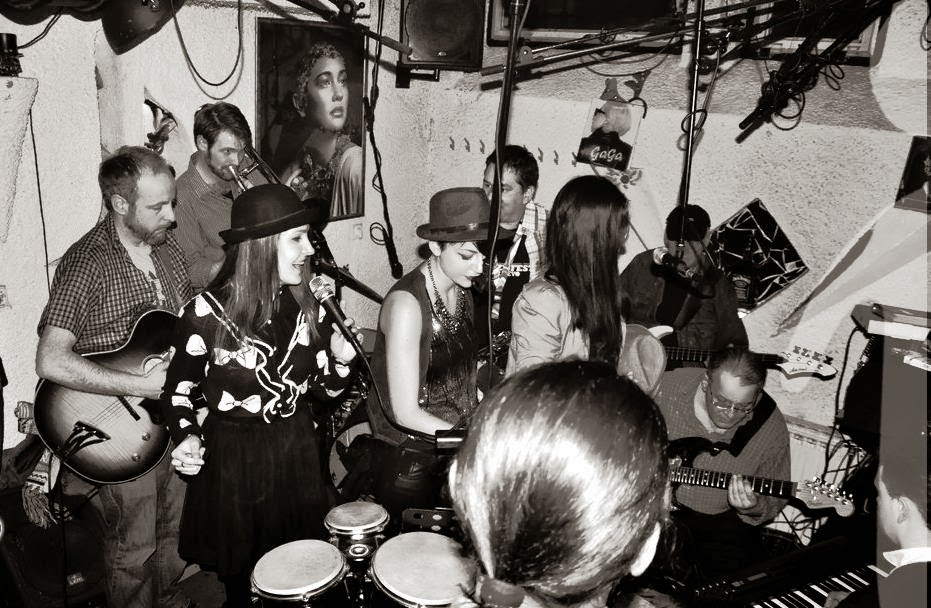
Hey!  Miki is performing at the Punk Houdini, our favorite nightclub in Sarajevo  (Almir and Dragana take us there)!  Poems by Lorca, Neruda, Rilke, etc. 
We last heard Miki recite by the church in Milna, where he spends time each summer.


Wednesday, March 12, 2014

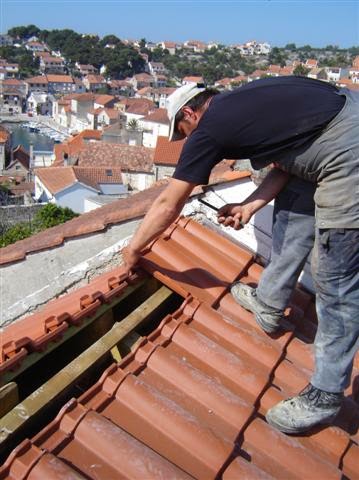
Slavko Brings Milna Work


Slavko is overseeing a few repairs and renovations on our place in Milna
for us. He sends some photos showing progress: an old chimney is gone,
a wall is being built where there was just an open hole to my attic
before, our dormer is being rebuilt, and then a nice new Mediterranean
tile roof will soon be installed.

Also he includes a scenic photo of the harbor from our roof and a shot
of our fig and lavendar.

Thanks so much Slavko!!!!

Monday, March 03, 2014

Lori has Good News!


After close watch yesterday at 11:50 last night this little guy showed up!

Sunday, February 16, 2014

Charles Writes: Cezanne

Chapter Four:  Cezanne the Father

The other gatekeeper to the modern for Picasso was the Provence recluse Paul Cezanne.  Cezanne painted in obscurity for over 40 years and then when his big break arrived, a large show in Paris arranged by Vollard, Cezanne chose to stay home and work on his painting rather than enjoy the glory of his new found fame.

Cezanne had been associated with the Impressionists over the years but he was different in his approach to painting nature in that he built up his images on the canvas rather than using a flowing line to define the subject.  Cezanne became the link from Impressionism to the Modern by his establishment of some other revolutionary techniques.

Cezanne gradually moved away from four hundred years of Renaissance perspective in painting to using a more two-dimensional painting representation of his subject matter.  Cezanne used color and a dabbing paint technique to build up his visual images and to go inside their meaning in order to build more depth on the surface of the canvas. 

Cezanne was the great distorter of images to get to draw you into a subject.  Take for example his over sixty paintings of Mount Saint-Victorie.  By the end of this sixty plus series the paintings were about the truth of the mountain and what he saw in the meaning of the mountain than the physicality of the mountain itself.

Picasso was so taken with his teacher that the last years of his life were spent living in a vast chateau at the foot of Sainte-Victorie where he could finally spread out his vast collection of Art and review his progress in the presence of his master’s shadow.

Cezanne’s reduction of his Art to two dimensions opened the way for modern Art and it’s use of color and space to provide the perspective.

It was not only what Cezanne had accomplished in his Art but it was equally important what he left undone.  The incompleteness in many of his later paintings spoke volumes about the future of Art.
Artists were now free to use the empty canvas surrounded by color in their paintings to express just the right gesture and emotion.

Cezanne was the other gatekeeper to the Modern for Picasso and Picasso dwelled by that gate his entire life.  In fact he is buried, in his private garden, facing Mount Sainte-Victorie and Cezanne’s ultimate image of truth.


Saturday, February 15, 2014

Charles writes: The Theft of the Mona Lisa

Chapter Five:  The Theft of the Mona Lisa

Apolinaire prompted Picasso’s interest in primitive art and the two of them would often drift into the evening discussing how primitive art was refreshing western art with new styles and forms and refreshing modern spirituality with the day to day sense of a connection with the divine that European civilization had exhausted.  These influences are very strong in the few years leading up to the development of Cubism.  You can see this influence in the “Three Women” where primitive forms collide with the soon to be Cubist forms          and especially in the stark brutality of “Les Demoiselles d’ Avignon which was so primitively powerful a study of ladies of the night that Picasso had to turn it against the wall for many years because his poet friends could not stomach the results.  It was even too modern for the band de Picasso.

Iberian statues were Picasso’s great passion at this time.   He would spend hours studying these primitive Spanish forms in the museums in Paris and did many drawings of them for his paintings.

Gery Pieret was a writer friend of Apollinaire.  He was younger, ruggedly handsome, tanned and he had a great artistic flair for thievery and this is how he came to focus himself on removing priceless antiquities from the Lourve Museum.

Gery Pieret shared stories of his sexual exploits with Apolinaire and hoped he would use this material in his novels and or his sexual novellas.  But in truth, Apolinare was afraid of what this friend might do next.  Pieret knew of Picasso’s fascination with Iberian sculpture and he also openly boasted that the security at the Lourve Museum was so lax that he could walk out the door with anything he pleased.  So one day he did just that, he stole four statues from the Lourve to impress Picasso and the Art world with his criminal exploits.

Picasso gleefully bought two of the statues for his collection and easily overlooked the fact that they were stolen property.  He somehow saw past the moral implications of the theft of archaeological property and the cultural loss for everyone else.  For Picasso it was more important that he was inspired by the statues than it was to have to consider the morality of doing business with criminals for the pleasure of his artistic pursuit.  Or maybe he just didn’t consider these things, or maybe he didn’t care to think through the consequences of this highly charged situation. 


Shortly thereafter this exchange of stolen property, Pieret found it necessary to leave Paris, possibly because of some unexpected personal transgressions or possibly he needed to avoid interaction with the police which caused the need to get lost for awhile.  Peret went to America to discover the Wild West. He would dress in a cowboy hat and leather chaps and carouse around the plains with the Cowboys until the dust settled back in France. 

Upon his return to Paris, a year later, he went to work for Apolinaire as his secretary. Gery then visited the Lourvre again and realized that mere amateurs were now stealing from the Louvre and he decided to send a message to the Art world about how elevated his criminal talents were for stealing statues from the museum and to put a scare into all of the amateurs who were trying to steal his thunder.  Pieret was able to walk out of the museum in broad daylight, with the statues under his coat and he decided that the best place to bring this bounty was back to Apolinaire’s home.

Gery left the pieces at Apolinaire’s  apartment to stand amidst the magnificent clutter of other statues, pottery, and paintings added in with the heaps and mounds of books, sex magazines, literary journals and periodicals.

There on the shelves of the bookcases stood the statues, with Apolinaire’s full knowledge, and all the other poets couldn’t believe Pieret that the sculptures had actually been stolen from the Lourve.  However, Apolinaire was quite aware of Pierets criminal proclivity.  Pieret was beginning to frighten Apolinaire and even though Pierets schemes for criminal exploits would excite him but when Peret actually pursued him to become an accomplice Apolinaire backed off in great fear.  The two men were at such great odds that within a few days Apolinaire left on a 10 day vacation and he hoped out loud that Pieret would be gone by the time he returned.

He wasn’t.  No such luck.  And to make matters even worse Pieret had written to the papers in Paris about his criminal talents and the lax of security at the Louvre.  This shook up both Picasso and Apolinaire, as foreigners, because they knew that it wouldn’t be long before they would be implicated in the theft of the statues and the probability for them being arrested and deported was rising madly.

Picasso was summoned back to Paris, from his vacation, by Apolinaire at the end of August and he and Apolinaire gathered up the stolen merchandise and swore they would throw the lot of them into the Seine.  After a night wandering around the two men could not bring themselves to throw the statues into the river and they took the treasures to the Paris Journal newspaper themselves and pleaded with the paper to return the statues to the museum for them.  The two artists put Pieret on a boat bound for Egypt and against all reason they hoped that their problems were behind them

And then, just a few days later, complete disaster struck.  The Mona Lisa was stolen from the Lourve and suddenly the infamous thief Pieret was now the prime suspect as he was suddenly the most well-known art thief in Paris.  Very shortly the police connected the dots to Apolinaire and they arrived at his apartment to arrest him just a few days after the theft of the Mona Lisa.  Apolinaire was taken across town to the police headquarters and was stripped searched, interrogated for hours and it was nearly ten days before he was brought to a hearing.  Apolinaire became a complete nervous wreck and was wrenched with fear that he would soon be expelled from France or imprisoned.  He was the only suspect the police had in connection to the theft of the great Mona Lisa.

Apolinaire and Picasso wanted to be internationally known as great artists but not like this.

When Apolinaire was finally brought to his hearing the Judge brought Picasso into the courtroom to question him on what he knew about Apolinaire and the theft of priceless Art.  Picasso stood in front of the judge and bold facedly claimed he had never met Apolinaire before in his life.


As Picasso told this convient lie in place of the truth Apolinaire was completely crestfallen and his face became nearly gray from the ashes of his emotions burning.  Apolinaire had been betrayed but he knew he had had a hand in the betrayal.  Apolinaire had opened the door for Picasso to become the uber anarchistic artist.  Picasso was given the right of complete artistic privilege over being a moral and upstanding citizen.

For Picasso continuing to work at his Art, in Paris, was more important to him than being truthful to the court and being truthful to his most complete like-minded friend that he would ever have.

We will see later that Picassos need to work at his Art was so great that during the German Occupation he chose to live with the Nazis, his cultural enemies, and keep on painting fully aware of the consequences of and the possible penalties of this situation.

Apolinaire recovered from the horrors of his arrest and betrayal by Picasso.  But he and Picasso would never be that close again.  Apolinaire began to recruit other artists into his artistic circle such as Robert Delaney, Picabia, Jaun Gris and others to the point where Apolinaire officially became the leading critic of Modern Art and he had a steady hand on its course.

However, he no longer had a steady hand on his friendship with Picasso.  Apolinaire found out what all of Picasso’s family and friends would find out, sooner or later, that the only thing important to the new Modern Picasso was to continue to work at his Art and the world and his friends would need to accommodate him or be left out of his life. 

Jarry’s education of Picasso was now complete.


Tuesday, February 11, 2014

Johns first ride on his horse

Monday, February 10, 2014

Happy 32nd Birthday, Spencer

Kirsten Lints Garden Triumph

At this year's Northwest Flower and Garden Show in Seattle, Kirsten walked away with top honors for her installation:  Best of Show, Gold Medal Winners, 425 Magazine Editor's Choice, X Factor Award, Pacific Horticulture Society Award, and the People's Choice award!!


Tuesday, February 04, 2014

Charles Tells Us About: The great washed Un-truth

Prelude to Chapter 2

I have often heard it spoken and sometimes whispered that Art is a lie.   While possibly true this statement leads to a corresponding one that says ultimately that there is truth in art.  I would instead put forth the idea that Art is, rather, the Untruth.  I really don’t think that Art wants to be known for or thought of in the same breath as being a collection of real facts.
 
It really does not matter if a fact in Art is true or not.  Who cares as it’s not as if we are discussing science, math or what you just said to your lover or your wife or your mother because we are talking about the mystery of Art and not the truth according to a collective association of the facts.  Art is the great Untruth that helps us find our own truth.  All that matters in Art, according to my logic, is what influence Art has upon us either in the making of or the enjoyment of or possibly even how it influences our sense of the erotic.
 
When speaking about facts concerning Jarry and Picasso you are already at a theoretical loss because of the anarchistic nature of their Beings. Throw into this mix the great circus master of artists G. Apollinaire and you, the reader, are thrust down a black rabbit hole concerning the truth or any grasp of the collection of facts or any coincidence with reality.  It could happen, but for each of these men the truth, they will all tell you without hesitation, the truth is whatever suits the situation or the moment or the need in any given moment.  
 
 
Remember that these unique personalities are artists and Anarchists and supreme believers in their own personal and artistic magic and myth and the only real truth they know is the objects of art they leave behind for the rest of us.  Picasso made over 20,000 objects of art so he did understand that kind of truth quite well.
 
Jarry lived in a hallucination and Apollinaire made up his own personal history when he needed or wanted to.  While they left behind an array of artistic gems between them you simply would never rely upon them for the truth of any matter whatsoever.  No that would be absolutely no fun at all for them and foolish for you to consider.
 
If the three of them did not know each other very well, or at all, they should have.  The magic of the avant-garde years was all mixed up in the water and the air and the mood that these great artists lived in and these three men worked hard and long stirring up this glorious mix and romance of the modern age.
 
These are the years that define our past greatness our past golden age of Being. That is, if you are a writer of Arty History, such as me.  That is what I do.  I write about Arty History.  I am not a Historian and I am not an Art Historian.  And I am not a scholar who writes about Art.  I write about Arty History as an Artist would write about history and if the truth is bent to its knees so much the better.  Like Pere Ubu said, “doesn’t that make such good literature.”   I learned long ago that the truth, in literature, is intolerably dull.  What is really so much better, as a writer, is to catch people’s imagination with as little truth as you might need and as much make-believe as you can dream up for your story.
 
Viva the liberation.


Saturday, February 01, 2014

Slavko: Museum Night in Croatia

. . . this is not a place where you would expect to see Nada, among
artifacts, but yes, it did happen!
Last night was an Open Museum Night, with free admittance to Croatia's
museums from 6 PM - 01 AM, and since we have a museum in Skrip we went,
me and two Nada's (Nada = Hope)!
The theme was Herakles, that explains togas, and Roman time food.
250 people by 8 PM!

Slavko

Charles Writes: Again an again and again

Another major snow storm today big saucer flakes 5 to 8 inches.

Apollinare

 Charles writes:  Chapter Three:  Guillaumie Apollinaire

Apollinaire arrived in Paris in 1899 after a murky childhood that was all mixed up with a ruthless and difficult Russian mother, Vatican secrets, questionable suitors of his mother and a life spent on the road between the South of France, Italy and Belgium as the family would need to skip town every so often when the gambling debts came due.  Apollinaire grew into becoming a handsome articulate man and decided that being a French writer was just exotic and possibly erotic enough of a career for a man of his talents.  Being a writer was perfect for Apollinaire because as his background was sketchy his writing talents allowed him to fabricate a more interesting past as he went along.

Apollinaire was charming and filled with a personal rage towards those who were limited in intellect.  And while only seven years younger than Jarry he, just as Picasso was to receeive, an education at the knee of Ubu Pere on the Art of the Modern.  Jarry’s last advice for Apollinaire was to get on with it.

Apollinaire’s charm and personal wit allowed him to become the circus master of the avant garde painting, in these pre-war years, so much so that he would become the critical theorist for Cubism, Futurism and even as early as 1917 he foresaw the Surreal Art school forming in post war France.  Apollinaire was not always correct in his criticism but he was always formulating his cultural vision for other people to understand these new art forms.

Apollinaire can be seen as the Juggler of Modern Art and all of the personalities of his artist friends revolved in the air around him.  He was the impresario of the future of Art.  Apollinaire galavanted about Paris gathering all the interesting artistic talent of the town into his modern circle of creativity.

Picasso and Apollinaire became great friends in 1904 just as Picasso was beginning to settle into his studio at the Bateau Lavoir.  It was at his studio that Picasso hung a sign on the door that read “les rendezvous de poets” and it was here that Picasso would welcome his literary friends Andre Salmon, Alfred Jarry, Max Jacob and many others to toss around the ideas that were to become the basis for modern art.  And now Picasso would welcome the greatest promoter of Modern Art into his life, the poet and provacteur Guillaumie Apollinaire.

Picasso needed another great mind, other than his own, to feed off of to develop his Art and he found that this need was fulfiled in the person of Apollinaire.  Apollinaire’s poetry and novels were groundbreaking work in literature and he was a challenge to keep up with in conversation and in his daily pursuit of his Art.  He and Picasso were both uber individuals in the Nietzsche legacy and through mutual respect for the others work he and Picasso became the fastest of friends and especially between the years of 1904 and 1908.

Apollinaire opened up Picasso’s youthful mind to Primitive Art, sexual sensibility and he gave intellectual Anarchist fuel to Picasso’s desire to upend the existing order of the Art world and the social order of life in general.

Many friends of both of the men claim that it was Apollinaire who gave advice and encouragement to Picasso that allowed him to leave the stark blue period and to begin to paint scenes of Paris life in a warmer rose color.  While the new paintings were still mostly taken from street life they were now populated with subjects like circus performers who were part of the working poor instead of the abject poor of the blue period. 

It is said that Apollinaire introduced Picasso to the secrets and imagery of the Harlequin and he made Picasso a believer that the Harlequin was a soul that had escaped from the depths of Hell.  Apollinaire gave Picasso a keen interest in the Saltimbanques and other street performers on the Paris Streets.

And finally in the early years of their friendship it was Apollinaire who lifted Picasso out of poverty by convincing the art dealer Vollard to purchase 20 of Picasso’s early works.  After this purchase by Vollard Picasso never had to ask his friends and family for money to support himself ever again.  Ironically it was always Picasso who helped his friends with money after this financial reward even though most of them had turned their heads when Picasso was in financial need as a youthful painter.


Chapter Four:  Cezanne, Matisse, Braque and Picasso